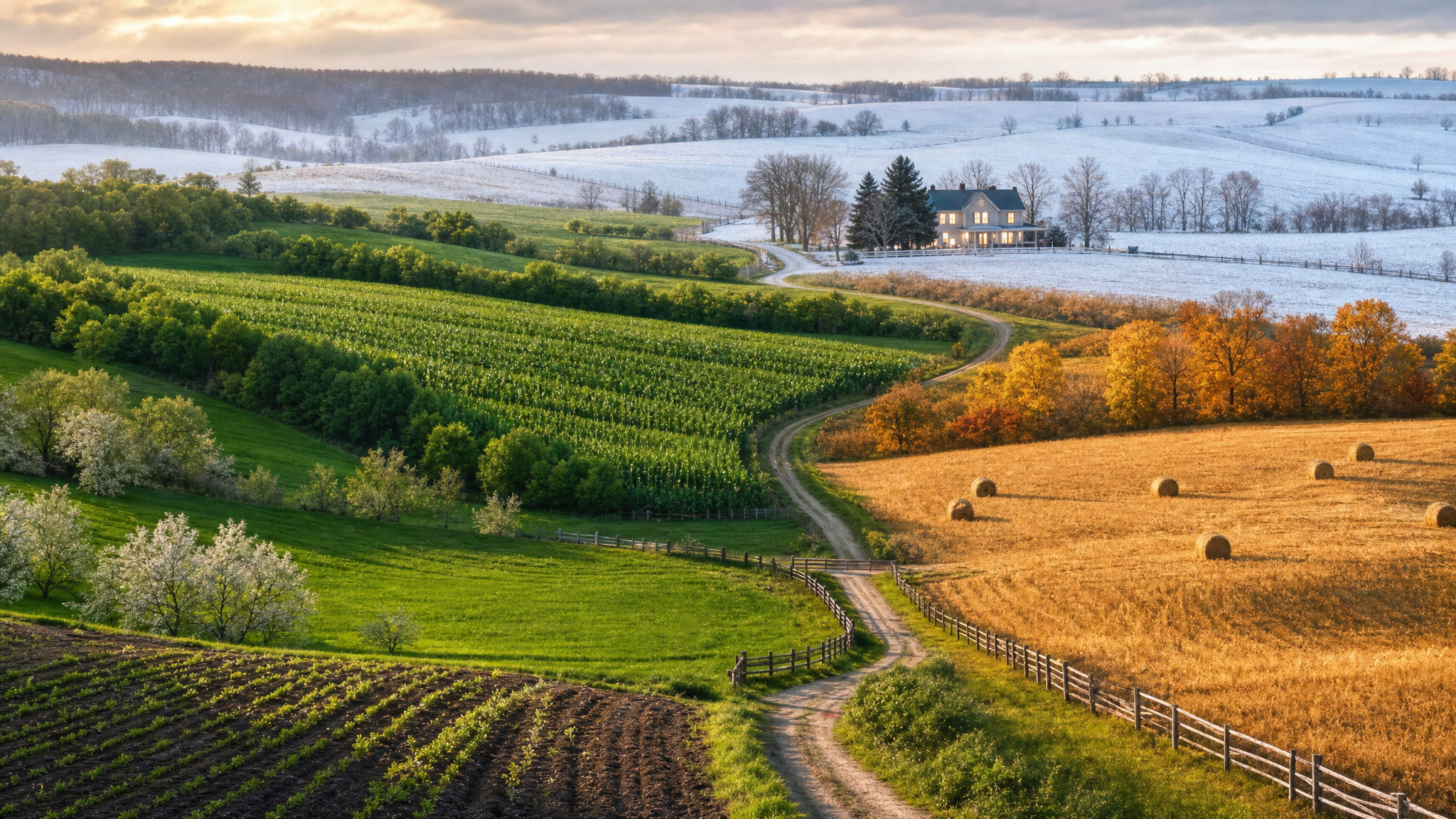
A retirement planning phases framework helps you make better decisions by matching your financial, tax, lifestyle, and family choices to the season of retirement you are actually in. Instead of treating retirement like one long, unchanging stretch, it helps you see that each phase brings a different kind of work, a different kind of risk, and a different kind of opportunity.
That matters because retirement rarely feels the way people expect it to feel. On paper, it can look like a finish line. In real life, it often looks more like working a piece of land across the year. There is a time to prepare the ground, a time to plant, a time to tend what is growing, a time to protect the harvest, and a time to decide what gets passed on. If you use the same plan for every season, you can end up making decisions that fit last year better than this one.
Spring in the field: getting ready before work changes
The first season starts before retirement officially begins. This is the stretch when work is still bringing in income, but the future is close enough that guesses need to become plans. For many households, this season is less about dramatic moves and more about lining up rows straight so the next season is easier to manage.
In this phase, the biggest questions are usually practical. When will paychecks stop or slow down? What will replace them? How much of retirement spending will be covered by reliable income sources, and how much will need to come from savings? Which accounts should be used first? How should taxes, healthcare costs, and debt fit into the picture?
This is also the time to pressure test assumptions. A lot of people carry a rough number in their head for what retirement will cost, but rough numbers can be like planting by eye without checking the weather or the soil. You may still get a crop, but you are taking more chance than you need to. This season often calls for cash flow planning, tax planning, benefit decisions, and a clear inventory of what each account is supposed to do.
That is one reason we often encourage people to think in terms of purpose, not just account balances. An assets-by-purpose framework can help sort money by job, whether that job is income, flexibility, growth, or future needs.
Planting season: the first years after retiring
The second season begins when work income changes or stops and retirement becomes real. This phase often feels exciting, but it can also feel unsettling. Even people who are financially prepared can experience a strange mix of freedom and second-guessing. The routine is different. Spending may change. The first withdrawals begin. The plan is no longer theoretical.
This is one of the most important seasons because early decisions can shape the years that follow. Claiming Social Security, deciding how much to withdraw from investment accounts, managing taxes, and setting a comfortable spending rhythm all tend to show up here. So does market uncertainty. When downturns happen early in retirement, they can do more damage than many people realize because withdrawals continue while account values are down. If you want to go deeper on that issue, our article on sequence of returns risk explains why the first stretch of retirement deserves special care.
This season is also where lifestyle choices become financial choices. Some retirees travel more than expected. Some help adult children. Some discover that hobbies cost money. Others find they spend less once the daily rhythm settles down. There is nothing wrong with any of that, but it does mean the first couple of years should be watched closely. On the farm, the first signs of a season tell you a lot about what kind of tending will be required. Retirement works the same way.
High summer: settling into a steady rhythm
After the early adjustment period, many people move into a season of greater stability. The routine feels more familiar. Spending patterns are easier to observe. Social Security may already be in place. The emotional shift away from a working identity has started to settle. This can be one of the most enjoyable phases of retirement because the new life no longer feels brand new, but it still carries energy and choice.
The risk in this season is quiet drift. When things are going smoothly, it is easy to assume the plan can be left alone for years at a time. But even a good field needs tending in midsummer. Weeds do not send warnings before they spread, and small imbalances in a retirement plan can grow if they are ignored.
This phase often calls for regular review rather than dramatic change. Are withdrawals still aligned with current spending? Has investment risk drifted higher or lower than intended? Are taxes being managed thoughtfully across different accounts? Are healthcare costs beginning to rise? If one spouse is more involved than the other, does the household have enough shared understanding to manage things if circumstances change?
This is also a useful season to revisit claiming and coordination decisions if they are still unresolved. For households working through that question, our guide on when to take Social Security covers several variables that can change the answer.
Good planning in this phase is less about urgency and more about stewardship. The goal is to keep the machine running smoothly, not to tear down the barn every year. Small course corrections made at the right time are often more helpful than big reactions made too late.
Fall in the pasture: protecting the harvest
The fourth season usually arrives as later retirement comes into view. Energy may change. Travel may slow down. Medical decisions may become more central. The focus often turns from expansion and experience toward protection and simplicity.
This shift is natural. In farming, fall is not failure. It is the season when you guard what you grew. Retirement is similar. At this stage, many people want fewer moving pieces, clearer systems, and a stronger handle on what would happen if health, memory, or mobility changed.
That can mean reviewing insurance coverage, account organization, estate documents, beneficiary designations, and the practical mechanics of paying bills and managing income. It can also mean discussing what happens if one spouse dies first, something many households avoid because it feels heavy until it becomes urgent. Our article on Social Security survivor benefits can help families understand one part of that transition.
This is also the season when simplification can become a gift. Too many accounts, too many scattered documents, and too many half-finished decisions can create stress for the retiree and for the people who may eventually help. A simpler plan is not always a lesser plan. Often it is a wiser one.
Winter and the legacy season: preparing the handoff
The fifth season is the legacy phase. Some people enter it gradually. Others arrive because of a health event, a loss in the family, or a major transition. In this season, planning becomes less about optimization and more about clarity, continuity, and care.
This is where financial planning and family planning meet. Who knows where the key documents are? Are powers of attorney current? Do beneficiaries match your intentions? Have you made it easier for loved ones to step in if needed? If retirement accounts are passed on, will the people receiving them understand the rules and tax consequences? We have seen that even well-meaning families can face confusion when important details are missing. That is why planning ahead matters.
Legacy is not just about money. It is also about reducing burden. It is about giving people a clean path to follow during a hard time. For some, that means charitable planning. For others, it means clear instructions, organized records, and candid conversations before a crisis forces them.
There is dignity in this season when it is approached with intention. Farmers know that stewardship includes preparing the next set of hands, not just managing the current crop. Retirement planning should do the same.
Why the season matters more than your age
One of the most common mistakes in retirement planning is assuming age tells the whole story. It does not. Two people who are both 67 can be in completely different seasons. One may still be earning strong income and deciding when to retire. Another may already be several years into withdrawals. A third may be caring for a spouse and focused mostly on healthcare and estate questions.
That is why a framework like this can be so helpful. It gives context to the decisions in front of you. It reminds you that the right planning conversation depends on where you are in the journey, not just on your birth year. The tools, priorities, and tradeoffs shift from season to season.
It also helps reduce the feeling that you are supposed to solve all of retirement at once. You do not need to harvest in spring or plow in winter. You need to do the work that fits the field in front of you.
A good plan changes as the weather changes
Retirement is not a static event. It is a long stretch of life with changing demands. A strong plan should be able to adapt when income changes, markets shift, health needs grow, or family circumstances take an unexpected turn.
That does not mean reacting to every headline or rewriting everything each year. It means reviewing the plan with enough honesty to see whether it still fits. The best retirement planning often looks less like prediction and more like good stewardship. You prepare carefully, stay watchful, and make thoughtful adjustments as conditions change.
If there is one takeaway from these five seasons, it is this: retirement gets easier to navigate when you stop asking for one permanent answer and start asking what this season requires. That question tends to lead to calmer decisions, better coordination, and a plan that feels more grounded in real life.
If you want help identifying your current season and what deserves attention now, click the button below to schedule a time to chat.